

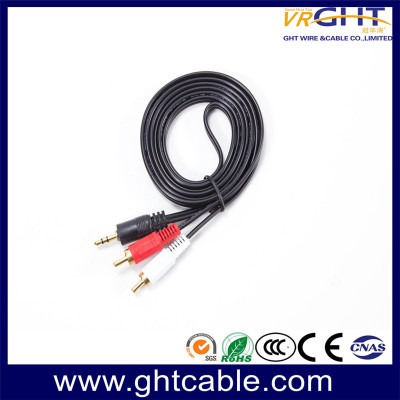
Do RCA Cables Really Affect Sound Quality?
RCA cables are still commonly used in home audio, car systems, and professional setups. However, not all RCA cables deliver the same level of performance. Many users ask the same question: are all RCA cables the same? The answer depends on materials, shielding, and build quality, which can directly influence sound clarity and signal stability.
What Is RCA and Why Does Cable Quality Matter?
RCA (Radio Corporation of America) cables are analog connectors used to transmit audio and video signals between devices such as amplifiers, speakers, TVs, and stereo systems.
Although RCA technology is simple, cable quality still matters because analog signals are sensitive to interference and signal loss.
Performance vs Experience Comparison
|
Factor |
Technical Impact |
User Experience |
|
Shielding |
Reduces interference |
Cleaner sound, less noise |
|
Conductor Material |
Affects signal stability |
Better clarity and detail |
|
Connector Quality |
Ensures stable contact |
No signal drop or crackling |
|
Cable Thickness |
Improves durability |
Longer lifespan |
Even though RCA is an analog format, poor-quality cables can still introduce hum, distortion, or weak signals.
Are All RCA Cables the Same?
The answer is no. RCA cables are not all the same, and this is one of the most common misconceptions in audio and home theater setups. When users search “are all RCA cables the same,” they are usually looking for a simple yes or no answer. However, the real difference lies in how the cable is built—especially in its materials, shielding, and overall construction quality. In practical use, these differences can affect signal stability, noise levels, and overall audio clarity, especially in more sensitive or high-performance systems.
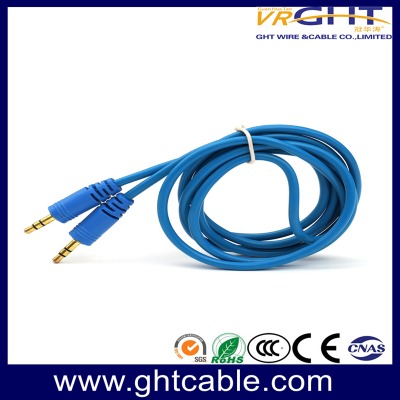
Materials & Shielding
The biggest difference comes from materials and shielding design.
- Conductor Material – Determines how efficiently the audio signal is transmitted
- Shielding Design – Blocks external electromagnetic interference (EMI/RFI)
- Connector Quality – Ensures stable and consistent signal contact
- Insulation & Build Quality – Affects durability and long-term performance
Common material differences:
Basic RCA cables often use aluminum or low-grade copper, which may result in weaker conductivity and higher signal loss.
Mid-range cables typically use Oxygen-Free Copper (OFC), which improves signal purity and reduces resistance.
High-end RCA cables may use high-purity copper or silver-plated conductors combined with multi-layer shielding for maximum noise rejection.
Shielding is especially important because RCA is an analog signal. Without proper protection, external interference from power cables, Wi-Fi devices, or appliances can introduce audible hum or distortion.
Cheap vs Expensive RCA Cables
Not all RCA cables are built for the same purpose. While it is not necessary to buy the most expensive option, extremely low-cost cables often become the weakest point in an audio system.
A higher-quality RCA cable does not necessarily “amplify” sound, but it helps preserve the original signal by reducing noise and maintaining stability throughout transmission.
Comparison Overview:
|
Type |
Material |
Shielding |
Sound Quality |
Best Use |
|
Cheap RCA |
Aluminum / basic copper |
Single layer |
May include noise |
Basic home use |
|
Mid-range RCA |
OFC copper |
Dual layer |
Stable and clean |
Home audio systems |
|
High-end RCA |
High-purity copper / silver plated |
Multi-layer |
High clarity |
Hi-Fi / studio use |
As shown above, the main differences are not about “louder” or “stronger” sound, but about clarity, noise control, and signal integrity.
Why "Cheap" Might Cost You More
For a business or a serious home setup, "cheap" is a liability.
- Durability: Cheap PVC jackets crack under heat or stress.
- Maintenance: Oxidized connectors require frequent cleaning or replacement.
- Troubleshooting: Most "system noise" issues are eventually traced back to a $2 faulty cable. Investing in quality upfront saves hours of technical frustration.
How to Choose Based on Your Setup
- For Subwoofers: Look for heavy shielding; subs are prone to picking up 60Hz mains hum.
- For Turntables: You need low-capacitance cables to preserve the delicate high frequencies of vinyl.
- For Pro Audio: Choose cables with reinforced "strain relief" to handle frequent reconnections.
RCA vs HDMI: Which One Should You Use?
This is the ultimate crossroads for modern connectivity. While both can transmit audio, their technologies are worlds apart.
The Technical Divide
HDMI (High-Definition Multimedia Interface) is a Digital powerhouse. It transmits data in packets (0s and 1s). It is essential for:
- Multi-channel Audio: If you want Dolby Atmos or 7.1 surround sound, HDMI is the only way.
- High Bandwidth: It carries 4K/8K video alongside audio.
- Error Correction: Because it’s digital, the signal is either perfect or missing—there is no "fuzzy" digital sound.
RCA is Analog. It transmits a continuous electrical waveform. It remains the preferred choice for:
- Pure Stereo Hi-Fi: Many audiophiles believe RCA provides a "warmer," more natural sound for music because it avoids the extra step of Digital-to-Analog conversion (DAC) inside a TV or cheap receiver.
- Legacy & Specialized Gear: Subwoofers, vintage amplifiers, and high-end turntables rely exclusively on the RCA standard.
The Verdict
- Use HDMI for your Home Theater, Gaming, and Video streaming. It simplifies your setup into one cable.
- Use RCA for dedicated music listening, connecting external amplifiers, or when you want to preserve the "analog soul" of your audio equipment.
For a deeper technical breakdown of these two standards, read our expert analysis: RCA Wiring vs HDMI: Key Differences Explained.
When is it Time to Upgrade?
If your current cables are thinner than a pencil, have visible oxidation (turning green/dark), or if you hear a "pop" when you touch the wire, it's time to upgrade.
GHT Cable designs RCA cables with high-purity OFC copper and multi-layer shielding to reduce interference and improve signal stability. Our goal is to deliver consistent audio performance for home, studio, and professional systems.
Conclusion
RCA cables absolutely make a difference, but not because of "magic"—it's because of physics. By choosing a cable with proper shielding and high-purity copper, you ensure your equipment performs at its theoretical maximum.
FAQs
Q: What does RCA input mean?
A: It is the standard analog socket (usually Red/White) used to receive audio signals from source devices like CD players or DACs.
Q: Do RCA cables affect sound quality?
A: Yes. Poorly shielded or high-resistance cables can introduce noise, hum, and a loss of detail in the high and low frequencies.
Q: Why is my RCA cable not working?
A: Most failures are due to internal wire breaks at the connector joint or oxidation preventing a solid electrical contact.
Q: Are expensive RCA cables worth it?
A: Professional-grade cables (like GHT) are worth it for the shielding and durability. However, "ultra-luxury" cables often provide diminishing returns for most users.


Leave a comment